Ajit Pawar Plane Crash: The Final 7 Minutes – What Went Wrong at Baramati Airfield?
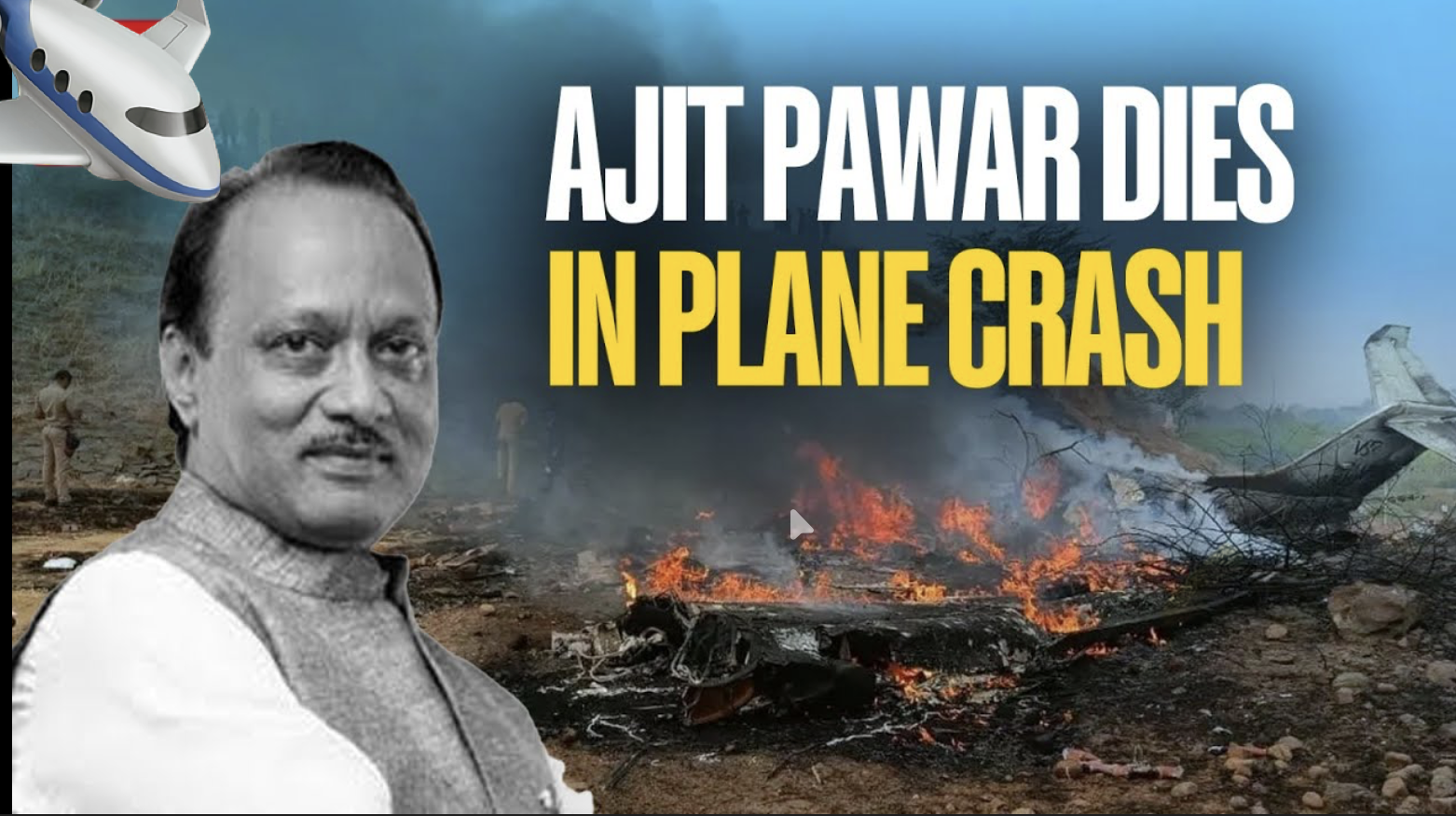
Ajit Pawar
The tragic plane crash that claimed the life of Maharashtra Deputy CM Ajit Pawar on the morning of January 28, 2026, has raised several questions regarding aviation safety and landing protocols at regional airfields. As Open-Source Intelligence (OSINT) and official statements emerge, we reconstruct the harrowing final minutes of the Learjet 45 (VT-SSK).
Was it a lack of visibility, a technical glitch, or a fatal miscalculation just 50 meters from the runway? Here is the sequence of events.
Timeline of the Tragedy: The Critical 7 Minutes
Based on flight tracking data and reports from the temporary Air Traffic Control (ATC) at Baramati, the final moments of the flight were a battle against the elements.
1. The Failed First Attempt (08:38 AM)
The aircraft made its first approach for landing at 08:38 AM IST. However, due to visibility issues, the pilots could not stabilize the approach. At 08:38:45 AM, the flight data shows a ‘Go-Around’ maneuver, where the pilots climbed back up to attempt a second approach.
2. Confusion Over Visibility (08:43 AM)
After circling back, the aircraft approached Runway 11 again. Communication logs reveal a tense moment:
-
08:43:00 AM: The pilots reported to the ATC that they could not see the runway.
-
08:43:20 AM: Moments later, the crew changed their statement, confirming that the runway was now in sight.
3. The Fatal Impact (08:44 AM – 08:45 AM)
At 08:43 PM, the ATC cleared the aircraft for landing. Crucially, the crew did not acknowledge this final clearance. Just sixty seconds later, at 08:44 AM, the ATC observer saw flames erupt near the threshold of Runway 11. The aircraft had crashed just 50 meters short of the runway on the left side.
Key Factors Under Investigation
The Aircraft Accident Investigation Bureau (AAIB) has launched a full-scale probe. Investigators are focusing on three primary areas:
-
VFR vs. IFR Conditions: The pilots were operating under Visual Meteorological Conditions (VMC), meaning they had to rely on their eyesight to land. Even with a reported 3,000-meter visibility, patchy fog or glare could have caused spatial disorientation.
-
Lack of Permanent ATC: Baramati Airfield does not have a permanent ATC tower. It is managed in shifts by local flying academies. The investigation will check if the ground guidance provided was sufficient for a high-performance jet.
-
The “Final Turn” Theory: Crashing 50 meters short and to the left suggests the plane may have stalled or lost altitude while trying to align with the runway centerline at the last second.
Official Response
The Director General of the AAIB is personally supervising the site investigation. The “Black Box” (Flight Data Recorder) has been recovered and is being sent for analysis to determine if there was any engine failure or fuel-related emergency in the final seconds.
The nation mourns the loss of a prominent leader, and the aviation community awaits answers to prevent such a tragedy from recurring.
Would you like me to provide a technical breakdown of how the AAIB investigates Black Box data, or more details on the Learjet 45’s safety record?